
Unleashing Creativity: The Dawn of AI-Enhanced Mobile Photography
The Evolution of Project Indigo: From Natural to Generative
Adobe's Project Indigo, initially launched to offer photographers an SLR-like experience on their iPhones, has undergone a significant transformation. What began as a tool for capturing natural-looking images is now embracing the power of generative AI, marking a pivotal shift in its development.
AI Playground: A New Dimension in Photo Editing
The latest update introduces the 'AI Playground,' an experimental suite of tools that allows users to manipulate images with generative AI. This initiative, which doesn't solely rely on Adobe's Firefly AI models, is being rolled out to a select group of users to gather feedback on how these advanced editing capabilities are utilized. The goal is to observe user interaction with GenAI-powered editing, with the possibility of expanding the experiment or introducing a paid version based on its success.
Exploring the AI Playground's Core Features
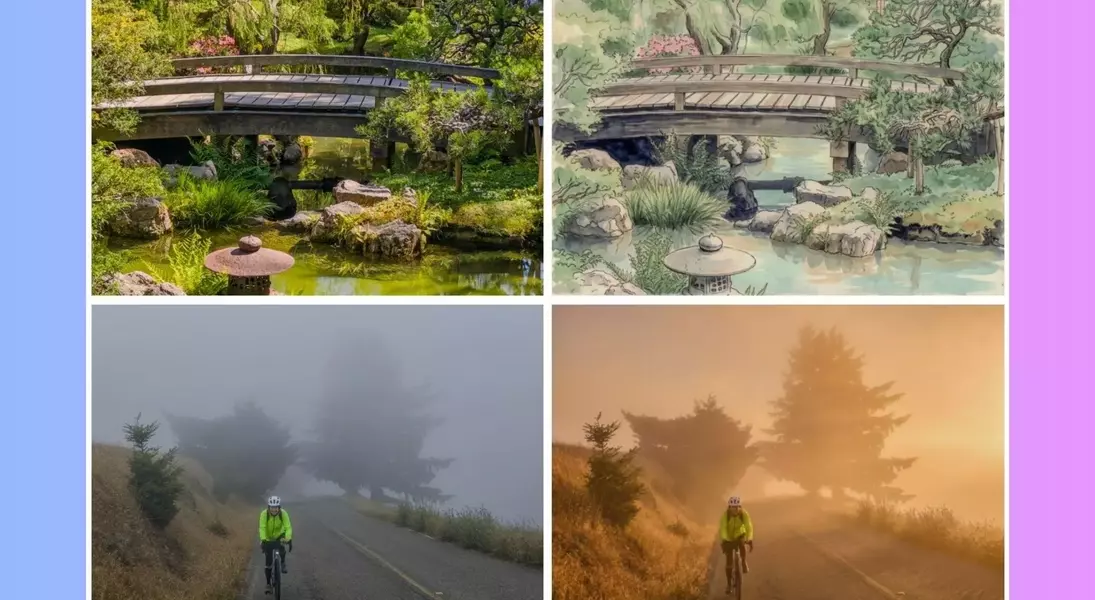
The AI Playground comprises four key sections designed to enhance photographic creativity: Styles, Object Editing, Photo Guidance, and Custom Edit. Each section leverages generative AI through engineered prompts, allowing for varied and iterative results with each click. Styles apply AI-generated filters, altering lighting and transforming images into different artistic renderings. Object Editing offers intelligent removal of unwanted elements from photos, seamlessly filling in gaps with AI-generated content, akin to Google's Magic Eraser. Photo Guidance acts as an AI-powered assistant, providing suggestions for improving shots and editing based on image analysis. Lastly, Custom Edit provides a broader, more detailed prompting interface, enabling users to fine-tune image manipulations beyond the presets, offering unprecedented control over the final output.
The Underlying AI Technology and Transparency
For the initial rollout of Custom Edit, Adobe is utilizing Google's Nano Banana AI model, with plans to explore additional model integrations in the future. Acknowledging the ethical implications of AI in image manipulation, Adobe is committed to integrating C2PA Content Credentials to ensure transparency regarding AI-generated content. This metadata standard, already prevalent in Adobe's Firefly models, aims to clearly identify images that have been altered by AI, alongside Google's invisible SynthID watermark applied by Nano Banana. This commitment underscores Adobe's stance on responsible AI usage, emphasizing that the ethical application of these powerful tools ultimately rests with the user.
The Journey Continues: Towards an Integrated Future
From its inception, Project Indigo was envisioned as the beginning of a long journey towards a unified mobile camera and editing platform. Marc Levoy, an Adobe fellow, highlighted this vision at the app's launch, emphasizing the integration of computational photography with cutting-edge AI. The introduction of generative AI features, while a departure from its initial 'natural look' focus, aligns with this broader goal, signaling Adobe's ambition to push the boundaries of mobile image creation and editing.