
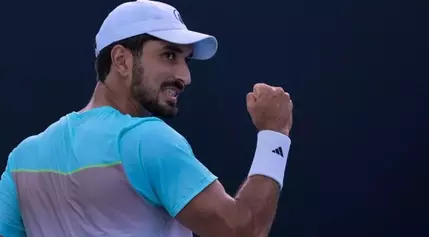
Hady Habib, a 26-year-old tennis player, has given Lebanon a moment of joy and pride following his remarkable triumph at the Australian Open. His win over China's Bu Yunchaokete marks a historic achievement as the first Lebanese player to secure a grand slam main draw match victory in the Open era. This accomplishment comes at a critical time for Lebanon, which has faced numerous challenges, including recent displacement due to regional conflicts. Habib's success not only highlights his personal talent but also serves as a beacon of hope for his homeland.
The match was fiercely contested, with Habib prevailing in three sets. His journey to this victory was no less challenging, having won three qualifying matches just to reach the main draw. Habib expressed that this win holds significant meaning, especially considering the difficult circumstances his country has endured. The ongoing struggles in Lebanon have made such positive news particularly impactful for its people. Despite now residing in the United States, Habib maintains strong ties to Lebanon, where he spent formative years from ages six to twelve, learning the sport that would define his career.
Habib's victory resonated deeply within the Lebanese community both in Australia and globally. Relatives and supporters traveled to Melbourne Park to witness his performance, creating an electric atmosphere on Court 13. The crowd's enthusiasm provided a much-needed boost, helping him clinch the match. Habib noted the incredible support he received, emphasizing how the energy from the spectators made the victory even more special. For many Lebanese fans, watching Habib succeed felt like a collective triumph.
Habib's next challenge will be facing the 14th seed, Ugo Humbert, in the second round. As he prepares for this match, his achievement continues to inspire not only tennis enthusiasts but also those who see in his success a symbol of resilience and hope. In a time when Lebanon faces uncertainty, Habib's win stands as a reminder of the potential for positive change and the enduring spirit of its people.