
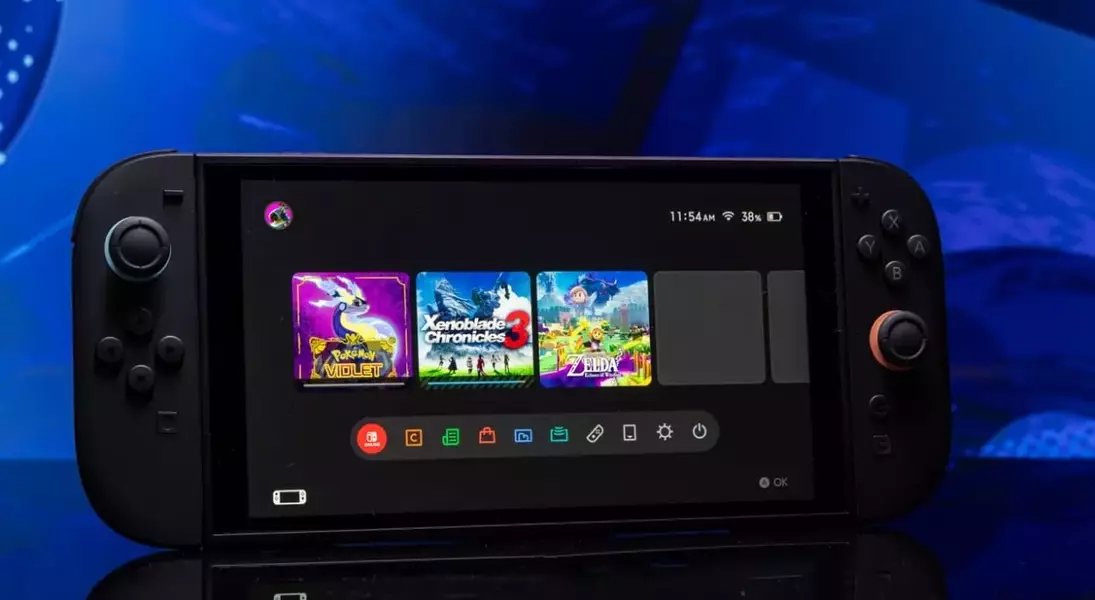
Experience the Future of Play: The Nintendo Switch 2 is Here!
From Revolution to Refinement: The Switch Legacy Continues
After eight transformative years, the original Nintendo Switch left an indelible mark on the gaming world. Its innovative hybrid design set a new standard, influencing countless players' experiences. Now, the Nintendo Switch 2 arrives, not as a radical departure, but as a thoughtfully evolved iteration. It’s a testament to the belief that perfection is an ongoing process, delivering a more powerful and polished gaming system that retains the core magic of its predecessor.
Enhanced Core Functionality: Powering Up the Experience
The Nintendo Switch 2 is more than just a console; it's a seamless evolution of a beloved design. This next-generation hybrid console, launched on June 5, significantly boosts processing power, ensuring games run smoother and look more visually stunning. Beyond raw specifications, it’s the meticulous attention to detail in user experience that truly sets it apart. While initial setup and accessory pricing present minor hurdles, these issues are expected to diminish as the platform matures, reinforcing the console's long-term appeal as a definitive gaming machine.
Display Quality: A Leap Forward, Yet with Room for Growth
The visual interface of the Nintendo Switch 2 represents a notable advancement, especially for those accustomed to the original model. Featuring a 7.9-inch LCD panel with 1080p resolution, a 120Hz refresh rate, and HDR support, it offers a sharper, smoother, and more dynamic visual experience. This upgrade enhances gameplay clarity and responsiveness, particularly in fast-paced titles. While the LCD technology doesn't deliver the vibrant colors or deep blacks of an OLED screen, and the HDR implementation faces brightness limitations, it nonetheless provides a high-quality display that greatly improves handheld gaming. The inclusion of a 120Hz panel is especially beneficial, allowing for fluid performance modes in demanding games like Cyberpunk 2077.
Revolutionary Controllers: Redesigned for Enhanced Ergonomics and Durability
The controllers for the Nintendo Switch 2 introduce significant enhancements, addressing previous design limitations while maintaining versatility. The new Joy-Con 2 controllers now utilize a magnetic attachment system, offering a satisfyingly secure connection and eliminating the previous model's slight wobble. This refined mechanism, coupled with a clever release lever, ensures greater stability. Additionally, the Joy-Con 2 controllers are larger, providing a more comfortable grip for adult hands, reducing strain during extended gaming sessions. The buttons offer a more tactile response, and the analog sticks exhibit improved responsiveness. The updated Pro Controller also delivers a superior feel, boasting increased density and weight, contributing to a more premium and robust gaming experience.
The Dock: Essential Connectivity Refinements
The docking station for the Nintendo Switch 2, while retaining its discreet design, incorporates vital enhancements for a more robust connected experience. Its slightly more substantial build accommodates enhanced internal components and improved cooling. Crucially, it now includes an integrated Ethernet port, a long-awaited feature that ensures stable and fast wired internet connectivity for docked play. While some users have reported initial issues with the Ethernet port, its presence signifies Nintendo's commitment to improving online functionality, catering to the demands of modern gaming environments.
Software Experience: Streamlined and User-Friendly Innovations
The software interface of the Nintendo Switch 2 mirrors the familiar aesthetic of its predecessor, presenting a clean and intuitive main menu with subtle updates. While the system retains a minimalist visual design, its operational responsiveness has seen a dramatic improvement. Navigating the eShop, a historically sluggish experience on previous Nintendo platforms, is now remarkably swift and seamless, allowing users to quickly browse, purchase, and download games. This focus on efficiency, though lacking in flashy thematic customization, significantly enhances the overall user experience, making digital interactions far more enjoyable and less frustrating.
GameChat: Elevating Social Connectivity in Gaming
GameChat stands out as a groundbreaking addition to the Nintendo Switch 2's social features, fundamentally transforming online multiplayer interactions. Accessible via the new "C" button on every controller, this voice and video chat functionality allows up to 12 players to communicate seamlessly. Unlike previous Nintendo iterations, GameChat prioritizes a user-friendly experience, enabling open-room microphone use with exceptional noise cancellation. The console's built-in microphone effectively isolates human voices, even amidst background noise, creating a clear and engaging communication channel. This innovative feature extends to group play, allowing multiple individuals in a physical space to communicate through a single microphone, fostering a more communal gaming environment.
Advanced Social Features: Beyond Voice Chat
GameChat on the Nintendo Switch 2 extends beyond mere voice communication, offering advanced functionalities that truly enhance social gaming. A standout feature is the ability for up to four participants in a GameChat session to stream their live gameplay feed to others. Although these streams run at a lower frame rate, they provide sufficient clarity to observe friends' gameplay, fostering shared experiences across different titles. This function even works cross-game, allowing users to showcase various games to their friends. Additionally, the console supports webcam integration, enabling video calls within GameChat sessions with compatible USB-C cameras. Furthermore, the innovative GameShare feature permits digital game sharing with friends for a limited period, allowing collaborative play without requiring each participant to own the game. These social innovations collectively redefine the online gaming experience on a Nintendo platform.
Navigating the Landscape of Costs and Quirks
While the Nintendo Switch 2 offers a compelling upgrade, it's important to consider some associated costs and minor inconveniences. The console's price point, while justified by its technical advancements, is compounded by the high cost of accessories. For instance, a pair of new Joy-Cons commands a significant price, and the Pro Controller also comes with a premium tag. Furthermore, launch titles like 'Mario Kart World' are priced at a higher tier. Storage expansion is another consideration, as the console exclusively supports microSD Express cards, a newer and pricier format compared to standard microSD cards, which are incompatible. The internal 256GB storage can quickly fill up with modern games, necessitating additional investment. The new "virtual game card" system, while innovative for digital rights management and sharing, introduces logistical complexities, particularly for households with multiple users, as shared titles become temporarily unavailable to the owner when loaned. Finally, the initial setup's one-time data transfer from a Switch 1 may cause issues for players of certain games that lack cloud save support, potentially leading to data loss if not handled carefully.
Battery Life: Balancing Power with Portability
As a hybrid console, the battery performance of the Nintendo Switch 2 is a key consideration. While Nintendo rates its battery life between two and 6.5 hours, real-world usage during intensive gaming sessions typically yields around three hours. This reduced longevity compared to the original Switch is a trade-off for the console's enhanced processing power and improved graphics capabilities. Although it might be a slight regression in terms of pure battery duration, this characteristic is consistent with many modern handheld gaming devices that prioritize performance over extended playtimes. The actual battery life experienced will vary significantly based on the graphical intensity and demands of the games being played, with more demanding titles consuming power at a faster rate.
Concluding Thoughts: A Triumphant Evolution
In summation, the Nintendo Switch 2 emerges as a remarkable achievement, expertly building upon the foundations of its highly successful predecessor. This hybrid console delivers substantial enhancements in system software and processing power, culminating in a more refined and visually impressive gaming experience. Its premium design maintains portability without sacrificing a robust feel, avoiding the bulk often associated with high-performance handheld PCs. While concerns regarding accessory pricing, the transition to microSD Express cards for storage, and the nuances of the virtual game card system are valid, they are largely overshadowed by the console's overall excellence. Nintendo's commitment to delivering superior first-party titles, coupled with significantly expanded third-party support, positions the Switch 2 for continued success. Furthermore, the innovative online social features, particularly GameChat, signify a profound shift in Nintendo's approach to multiplayer interactions, finally embracing the connected gaming landscape. The next era for Nintendo promises to be as vibrant and engaging as its past.