
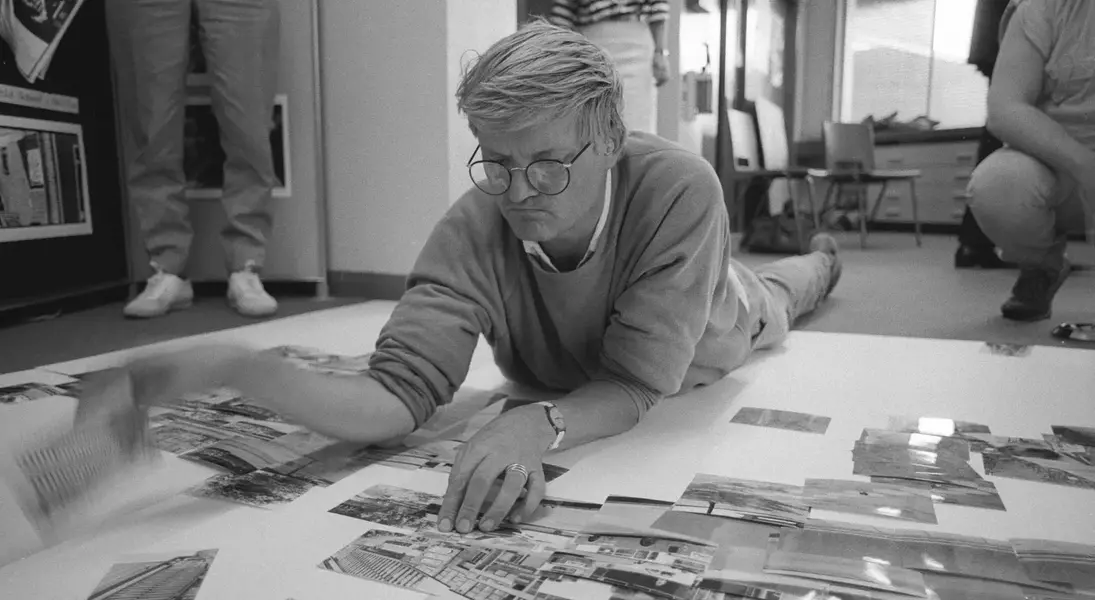
Today, as we observe World Photography Day, it's a fitting moment to appreciate the transformative power of photography through the pioneering work of renowned artist David Hockney. His remarkable 'joiner' photographic collages, born from a serendipitous encounter with Polaroid film, showcase a truly innovative approach to visual storytelling.
The Artistic Journey of David Hockney: From Skepticism to Photographic Innovation
The esteemed British artist, David Hockney, who departed this world in June of this year at the age of 86, was, for a significant portion of his career, a vocal disbeliever in photography's capacity to serve as a meaningful artistic tool. He often expressed doubts about its ability to convey profound artistic expression, viewing it primarily as a documentary medium. However, a pivotal moment arrived in 1982 when his friend, the curator Alain Sayag, introduced him to the instant gratification of Polaroid photography. Sayag suggested Hockney use the medium to catalogue his personal art collection, a proposition that unexpectedly ignited a new creative passion within the artist.
This initial foray rapidly evolved into a profound fascination. Hockney, known for his bold artistic experiments, soon acquired a substantial quantity of Polaroid film and embarked on a groundbreaking series of what he termed 'joiners' — intricate, fractal compositions. These works, many of which are now showcased on the David Hockney Foundation's website, are truly captivating. As an admirer of instant photography, this author finds them utterly mesmerizing. Hockney's genius lies in his ability to manipulate perspective and distance, deconstructing and reassembling real-world scenes with meticulous care, yet deliberately eschewing naturalism. Each collage is a testament to his painstaking process, where the individual Polaroid frames are not merely assembled but woven into a cohesive, often cubist-influenced narrative.
In these compositions, human figures sometimes appear across multiple frames, creating a dynamic sense of movement and elapsed time. Faces and forms are fragmented and then reconstituted, evoking parallels with the cubist masterpieces of Picasso, an artist Hockney greatly admired. The inherent gaps between the photographic prints are not concealed but celebrated, becoming integral elements that contribute to the overall texture and meaning of the final artwork. This ingenious integration of negative space underscores the brilliance that characterized Hockney's career, confirming his status as an artist who consistently pushed the boundaries of his chosen mediums.
Following his exploration with Polaroids, Hockney’s embrace of photography deepened. He transitioned to using a Pentax 110, a compact interchangeable-lens SLR camera, for his subsequent photographic endeavors. With this new tool, he traversed the globe, producing an extensive body of collages, including an iconic rendition of the Grand Canyon. His innovative photographic composites were later exhibited at the prestigious André Emmerich Gallery in New York, under the fitting title 'Drawing with a Camera,' solidifying his legacy as a true pioneer in the art of photography.
David Hockney's journey from a photographic skeptic to a masterful innovator serves as a powerful reminder of art's endless possibilities. His Polaroid 'joiners' are more than just images; they are a testament to how an artist's vision can transform a medium. On World Photography Day, let's draw inspiration from Hockney's spirit of exploration and take a moment to reflect on the photographers and artists who continue to challenge our perceptions and enrich our visual world.